
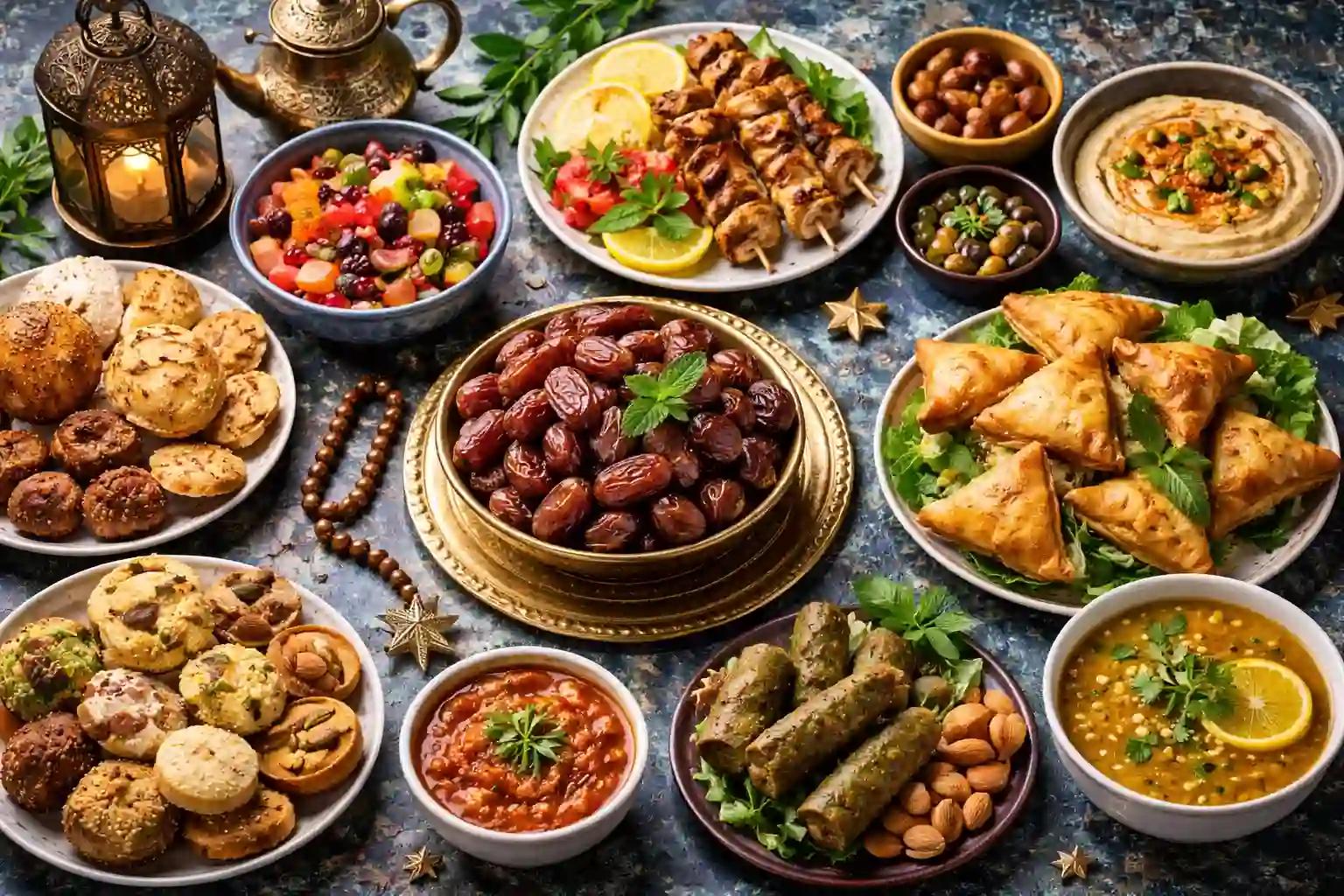
Short Answer: This Ramadan food checklist highlights the best suhoor and iftar foods to help you fast healthily, stay energized, and maintain balanced nutrition throughout the day.
Fasting during Ramadan is a deeply spiritual practice, but it’s also a physical challenge that requires careful planning of food during Ramadan to maintain energy, hydration, and overall health.
This Ramadan Food Checklist covers the best foods for balanced suhoor and iftar meals, with a catering service in Dubai providing convenient, healthy options to keep you energized throughout the day.
Why a Healthy Ramadan Food Checklist Matters
Eating intelligently before dawn (suhoor) and after sunset (iftar) helps you:
- Maintain energy levels all day.
- Avoid dehydration and fatigue.
- Support digestion and well-being.
- Prevent unhealthy weight changes.
A balanced fasting diet isn’t about eating more; it’s about eating right, and a reliable Ramadan catering service in Dubai can help ensure your meals are nutritious and well-planned.
Suhoor Foods: Fuel for a Long Day
A good suhoor meal should be nutrient-dense, providing slow-release energy so you feel fuller longer.
Include These in Your Suhoor
- Complex carbohydrates: Oats, brown rice, and whole-grain bread digest slowly and help keep you satisfied.
- Lean proteins: Eggs, yogurt, lentils, or grilled chicken provide sustained energy.
- Fruits & vegetables: Water-rich fruits like cucumbers, watermelon, and dates help with hydration.
- Healthy fats: Nuts, seeds & avocado, small amounts help with fullness.
Sample Suhoor Plate
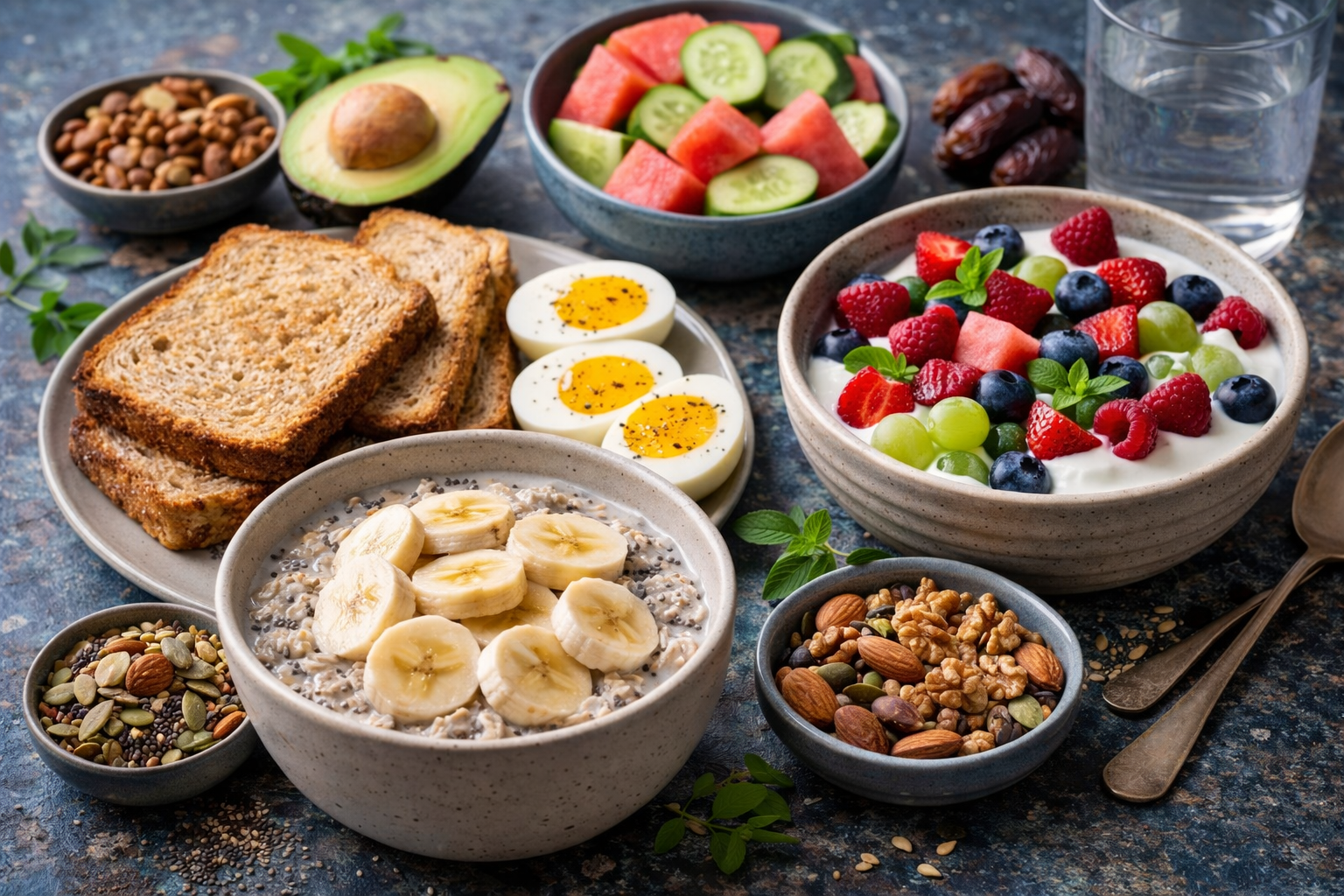
- Overnight oats with chia seeds and banana.
- Boiled eggs and whole-grain toast.
- Fruit salad and yogurt.
Tip: Drink water before suhoor ends to help prevent dehydration during the day.
Iftar Foods: Nourish After the Fast
Start with lighter options before moving to a main meal.
Iftar Food Checklist
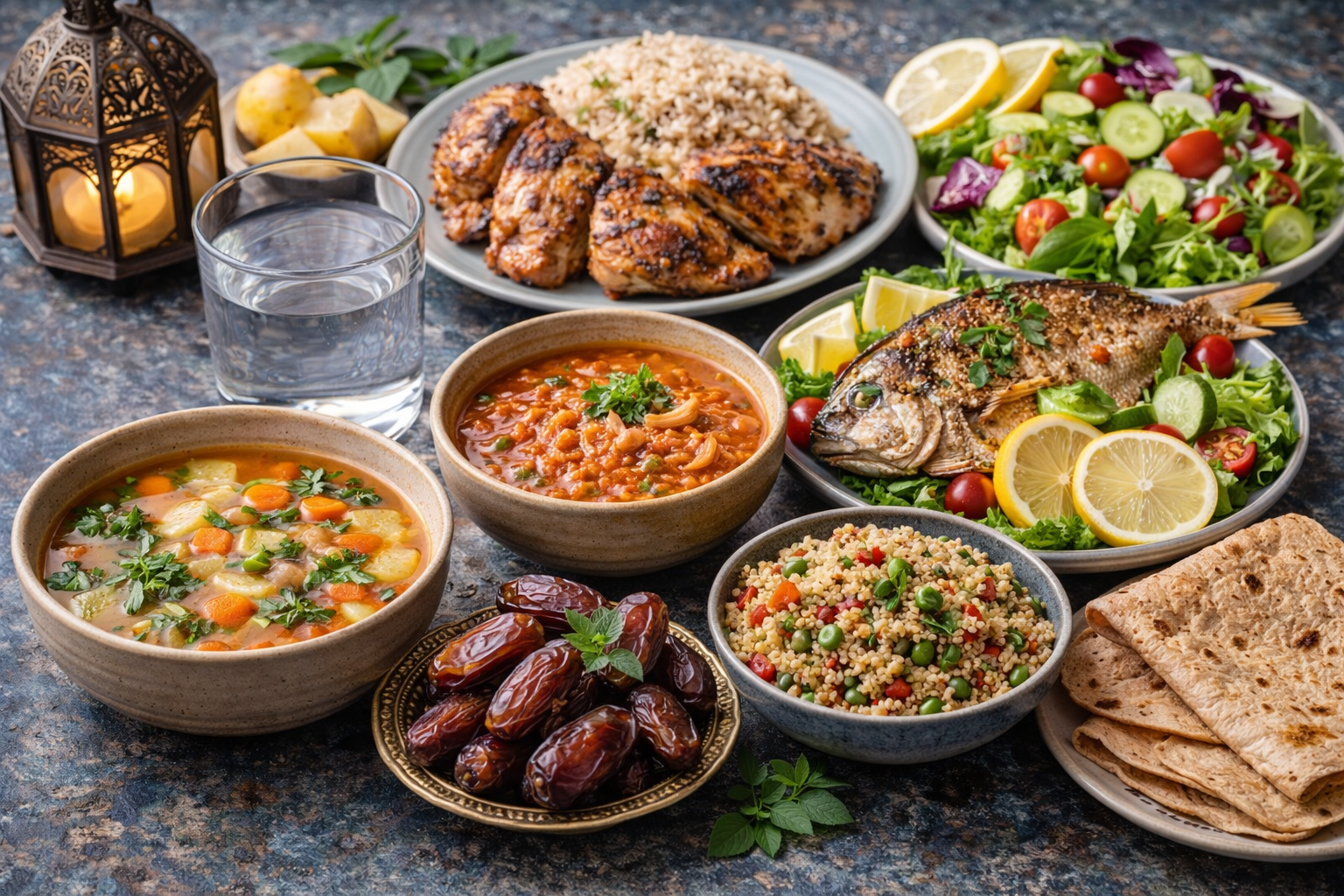
- Dates & water: A traditional way to break the fast; dates provide natural sugar and fiber.
- Soups: Chicken or vegetable soups are hydrating and easy on the stomach.
- Lean proteins: Fish and skinless chicken for muscle strength.
- Moderate carbs: Brown rice, quinoa, and wholemeal roti for energy.
- Vegetables & salad: Vital vitamins and fiber keep digestion on track.
Avoid or Limit to Try
Fried foods, sugary drinks, and salty snacks increase thirst.
Ramadan Food Box: Grocery Checklist
Here’s a simple shopping list to keep the best foods for Ramadan on hand:
- Brown rice, whole grain bread, oats
- Dates, bananas, watermelon
- Lentils, beans, eggs
- Yogurt, milk
- Lean meats (chicken, fish)
- Nuts & seeds
- Fresh vegetables (spinach, cucumber, carrots)
Tip: You can also have these ingredients conveniently prepared in a Ramadan Iftar meal Box in Dubai for a ready-to-eat, balanced meal.
Pro Tips for a Healthy Fast
- Hydrate constantly between suhoor and iftar; aim for 6 to 8 glasses of water.
- Eat slowly and mindfully to prevent overeating.
- Keep a balance: half your plate veggies, a quarter protein, and a quarter carbs.
Conclusion
A well-planned Ramadan food checklist makes the fasting experience healthier, more energizing, and spiritually fulfilling. Maintaining balanced meals, proper hydration, and smart grocery planning, or relying on a Suhoor and Iftar Catering in Dubai, sets you up for a successful Ramadan.
Trusted Catering Services in Dubai for Ramadan Meals
Professional catering services in Dubai offer healthy, well-balanced suhoor and iftar meals tailored for Ramadan fasting.
- Nutrition-balanced menus designed to sustain energy and hydration.
- Fresh, hygienic preparation in accordance with strict food safety standards.
- Custom meal plans for homes, offices, and corporate iftar events.
- Time-saving convenience with consistent quality throughout Ramadan.
Frequently Asked Questions
1. What are the best foods to eat for suhoor during Ramadan?
The best suhoor foods include whole grains, eggs, yogurt, fruits, and healthy fats, which provide long-lasting energy and help prevent hunger.
2. What should I eat at iftar for a healthy fast?
A healthy iftar should start with dates and water, followed by lean protein, vegetables, and complex carbohydrates to restore energy gently.
3. Which foods should be avoided during Ramadan fasting?
Fried foods, sugary drinks, and salty snacks should be limited, as they cause dehydration, fatigue, and digestive discomfort.