
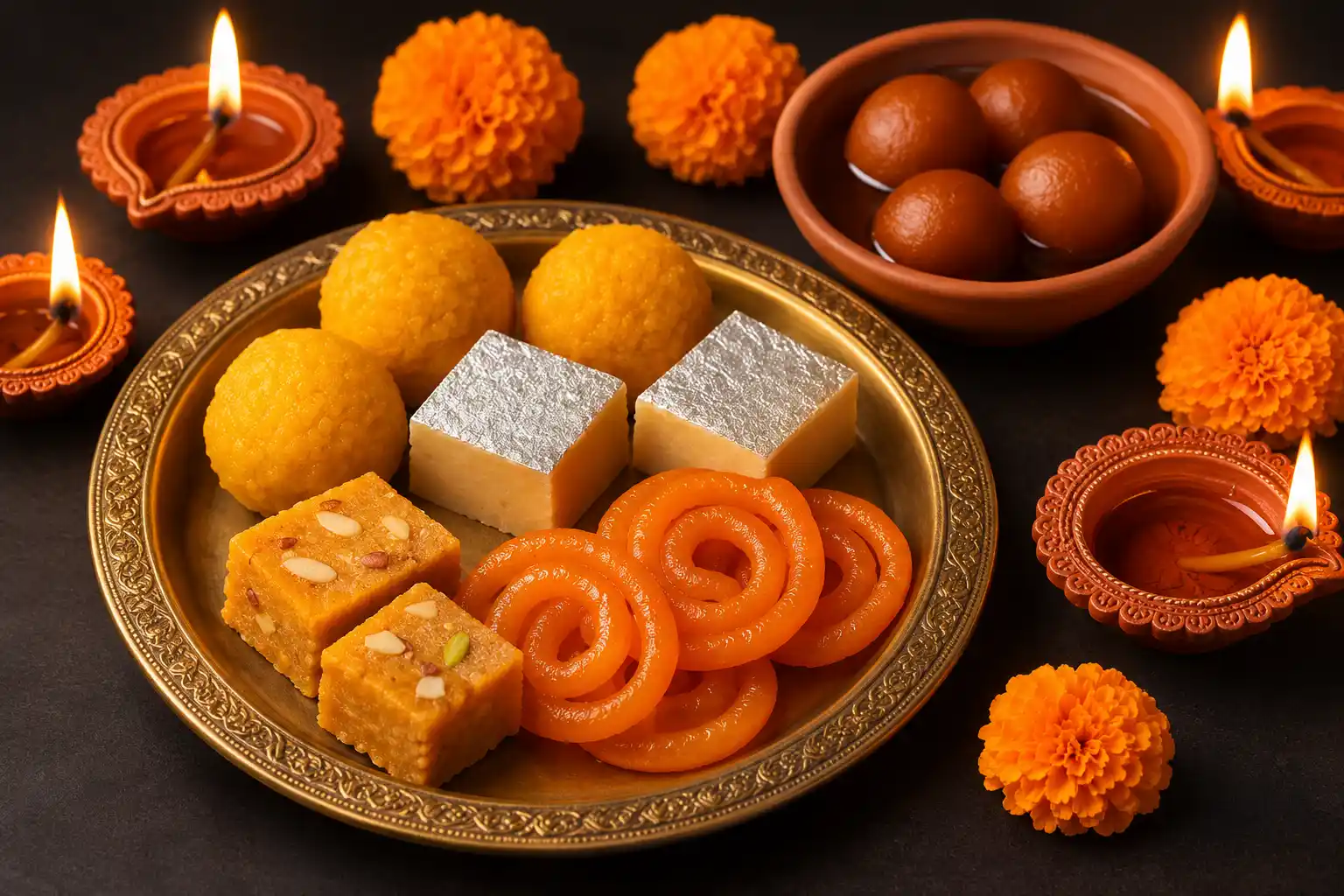
Your Indian colleague just handed you a box of sweets. Or you have been invited to a Diwali dinner for the first time. You open the box and see ten things you cannot name. Where do you start?
This guide explains the 10 most popular Diwali sweets in plain words: what they are made of, how they taste and how to eat them. By the end, you will know your kaju katli from your rasmalai.
What Is Mithai?
Mithai is the Hindi word for Indian sweets. Most mithai is made from a few simple ingredients: milk, sugar, ghee (clarified butter), flour, nuts and spices like cardamom and saffron.
Mithai is richer and sweeter than most Western desserts. That is why people eat it in small pieces, not big slices.
Why Are Sweets So Important on Diwali?
Sweets are at the heart of Diwali for three reasons:
- Offering: families offer sweets to Goddess Lakshmi during the Diwali puja. This offering is called bhog or prasad.
- New beginnings: Diwali marks a fresh start, and sweets stand for a sweet year ahead.
- Sharing: people give mithai boxes to family, friends, neighbours and colleagues. It is a way to say thank you and stay close.
In Dubai, where many cultures live side by side, a box of mithai is often the first taste of Diwali for many residents.
The 10 Diwali Sweets at a Glance
| Sweet | Main ingredient | Texture | Served | Contains nuts |
|---|---|---|---|---|
| Kaju Katli | Cashew nuts | Smooth, fudge-like | Room temperature | Yes |
| Gulab Jamun | Milk solids | Soft, syrupy | Warm | No |
| Jalebi | Flour batter | Crispy, sticky | Hot | No |
| Ladoo | Gram flour or boondi | Crumbly or soft | Room temperature | Often |
| Rasmalai | Cottage cheese, milk | Spongy, creamy | Chilled | Yes (garnish) |
| Rasgulla | Cottage cheese | Spongy, juicy | Chilled or room temperature | No |
| Barfi | Milk solids | Dense, fudge-like | Room temperature | Often |
| Peda | Milk solids | Soft, dense | Room temperature | Sometimes |
| Gujiya | Flour, khoya filling | Crispy outside | Room temperature | Yes |
| Soan Papdi | Gram flour, sugar | Flaky, melts in mouth | Room temperature | Yes (garnish) |
10 Popular Diwali Sweets, Explained
1. Kaju Katli
Kaju katli is a thin, diamond-shaped sweet made from ground cashews and sugar. It is smooth, soft and only lightly sweet. Many pieces have a thin layer of edible silver on top, called vark. It is the most gifted sweet on Diwali and a safe first choice for beginners.
2. Gulab Jamun
Gulab jamun are soft, golden-brown balls made from milk solids. They are fried, then soaked in a rose and cardamom sugar syrup. Eat them warm with a spoon, as they are very juicy. If you like doughnuts, you will love these.
3. Jalebi
Jalebi is a bright orange spiral made from fried batter dipped in saffron syrup. It is crispy outside and sticky inside. It tastes best hot. In North India, people often eat it with rabri (thick sweetened milk).
4. Ladoo
Ladoo are round sweet balls, and there are many kinds. The two most common on Diwali are:
- Besan ladoo: made from roasted gram flour, ghee and sugar. Nutty and crumbly.
- Motichoor ladoo: made from tiny fried drops of gram flour batter (boondi) in syrup. Soft and bright orange.
Ladoo are also a common offering in the Diwali puja.
5. Rasmalai
Rasmalai are flat, soft discs of cottage cheese (chhena) soaked in thick, sweet milk. The milk is flavoured with cardamom and saffron and topped with chopped pistachios. It is served chilled and eaten with a spoon. It is one of the lightest-tasting Indian sweets.
6. Rasgulla
Rasgulla are white, spongy balls of cottage cheese cooked in light sugar syrup. They come from eastern India. When you bite one, the syrup squeezes out. Rasgulla is less rich than most mithai, so it suits people who do not like heavy sweets.
7. Barfi
Barfi is a dense, square sweet that feels like soft fudge. The basic version is made from milk solids (khoya) and sugar. You will also find coconut, pistachio and chocolate barfi in Dubai sweet shops.
8. Peda
Peda are small, round sweets made from slow-cooked milk and sugar, often with cardamom or saffron. They are soft, rich and taste a little like caramel. Peda is a popular temple offering and a good, simple sweet for gifting.
9. Gujiya
Gujiya look like small half-moon pastries. The crisp shell is filled with sweetened khoya, coconut and dry fruits, then fried. In Maharashtra, a similar sweet is called karanji. Families often make them at home in the days before Diwali.
10. Soan Papdi
Soan papdi is a light, flaky cube that melts in your mouth. It is made from gram flour, sugar and ghee, pulled into fine threads. It lasts longer than milk-based sweets, so it is a very common choice for Diwali gift boxes.
How to Eat Mithai: Tips for First-Timers
- Start small. Mithai is rich. Try half a piece first, then go back for more.
- Begin with the mild ones. Kaju katli, rasgulla and peda are easy first picks.
- Use a spoon for syrupy sweets. Gulab jamun, rasmalai and rasgulla are too juicy for fingers.
- Eat jalebi and gulab jamun warm. They taste best fresh.
- Pair with tea. A cup of masala chai cuts the sweetness nicely.
- The silver is edible. The thin silver layer (vark) on top of kaju katli and barfi is safe to eat.
How Long Does Mithai Last?
Most mithai is made without preservatives, so it does not keep for long. As a general guide:
| Type | Examples | Keeps for |
|---|---|---|
| Milk-based and syrupy | Rasmalai, rasgulla, gulab jamun | 1–2 days in the fridge |
| Soft milk sweets | Barfi, peda | 2–4 days, in the fridge in Dubai heat |
| Dry and nut-based | Kaju katli, ladoo, soan papdi, gujiya | Up to a week in an airtight box |
Always check the date on the box, and follow your sweet shop’s advice.
How Much Mithai Should You Order?
For a Diwali party, plan 3–4 pieces per guest, with at least 4 different sweets on the table. Add extra if guests will take sweets home. For gift boxes, 250 g or 500 g boxes are the most common sizes.
Mix textures for a good spread: one syrupy sweet, one fried, one milk-based and one nut-based. For more menu ideas, see our Diwali party food ideas.
Dietary Notes: Nuts, Dairy and Sugar
- Vegetarian: almost all mithai is vegetarian. Most do not contain eggs.
- Dairy: most sweets use milk or ghee, so they are not suitable for vegans or people with a milk allergy.
- Nuts: kaju katli, gujiya and many barfis and ladoos contain nuts. Always ask before serving guests with allergies.
- Gluten: jalebi and gujiya use wheat flour. Besan ladoo and soan papdi use gram flour but may also contain wheat.
- Sugar-free: many Dubai sweet shops and caterers now offer sugar-free or low-sugar versions.
Giving or Receiving Mithai: Simple Etiquette
- Receiving a box? Say thank you and try a piece. It is polite to share it with your family or team.
- Giving a box? A mix of 4–6 sweets is a safe choice. Kaju katli and soan papdi travel well and last longer.
- Visiting a home on Diwali? Bringing a box of sweets or dry fruits is the most common gift.
- Returning the box? In many families, a plate of sweets is never returned empty. A small treat in return is a kind gesture.
Not sure how the rest of the festival works? Our guide on how to celebrate Diwali at home explains the five days, the puja and the traditions.
Ordering Diwali Sweets in Dubai
Diwali week is the busiest time of year for sweet shops in Dubai. Queues are long and popular sweets sell out. Order at least 3–4 days before the day you need them.
If you are hosting a party or an office celebration, a caterer can take care of the whole sweet table. Our dessert catering in Dubai team makes fresh mithai platters, live jalebi counters and individual sweet boxes for guests and staff.
Frequently Asked Questions
What is the most popular Diwali sweet?
Kaju katli is the most popular Diwali sweet, especially for gifting. Gulab jamun, ladoo and jalebi are also found at almost every Diwali celebration.
What is the difference between rasgulla and rasmalai?
Both are made from cottage cheese. Rasgulla is a round ball soaked in light sugar syrup. Rasmalai is a flatter disc soaked in thick, sweet milk with saffron and pistachios.
Is the silver on Indian sweets edible?
Yes. The thin silver leaf on top of sweets like kaju katli and barfi is called vark. It is edible and has no real taste.
Which Diwali sweets are good for people who don’t like very sweet food?
Try rasgulla, kaju katli or peda. They are lighter and less sugary than syrupy sweets like jalebi and gulab jamun.
How much mithai do I need for a Diwali party?
Plan for 3–4 pieces per guest with at least 4 types of sweets. Add more if guests will take sweets home.
Taste Your Way Through Diwali
You do not need to know every sweet to enjoy Diwali. Start with kaju katli, try a warm gulab jamun and see where your taste takes you.
Planning a Diwali celebration this year? Explore our Diwali catering in Dubai menus, with fresh mithai platters, live stations and full Indian catering spreads. Message us on WhatsApp for a quick quote.
Happy Diwali from all of us at Catering Service Dubai!